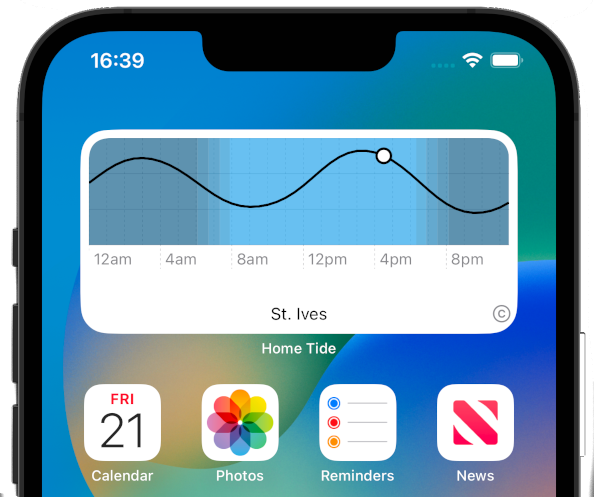
I’ve been thinking about natural rhythms. I made Home Tide so I could tune in to the rhythm of the tides, but I also included the rhythm of the sun - by colouring the background of the Home Screen widget to match the hours of daylight, nighttime and the three types of twilight:
I like growing some of my own food, which helps put me in tune with the rhythms of the seasons. I like knowing when to expect frost, when the strawberries will be ready to eat and when the butteflies will start arriving to decimate the purple sprouting broccoli. The bastards.
Getting in the sea a lot helps keep me be in tune with the tides, the seasons and the sun. I like knowing that when the Atlantic hurricane season starts I’ll begin to see longer interval waves arriving, grouped into sets, with the best quality groundswell arriving as we get to December and January. Being in the sea at the start and end of the day also help me get in tune with where and when the sun rises and sets.
Which is something I only found out recently (by reading Tristan Gooley’s books): the sun doesn’t always rise in the East and set in the West. That only happens on the equinoxes - which this year are 20th March and 23rd September. There’s a surprising range to where the sun might pop up (or down) too. Here’s the range for a spot near me:
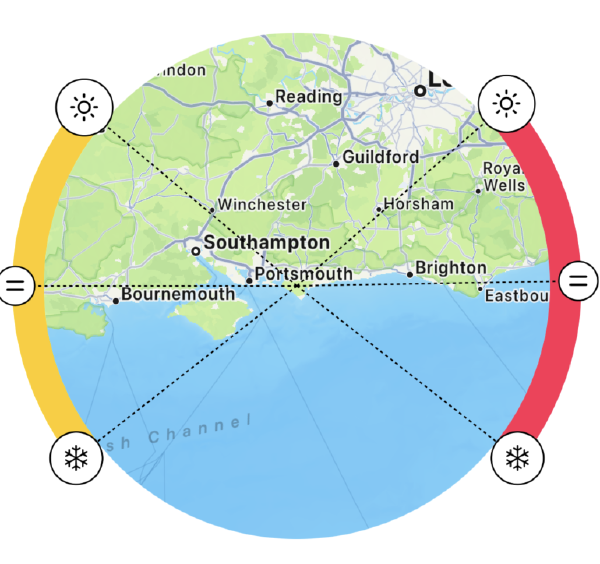
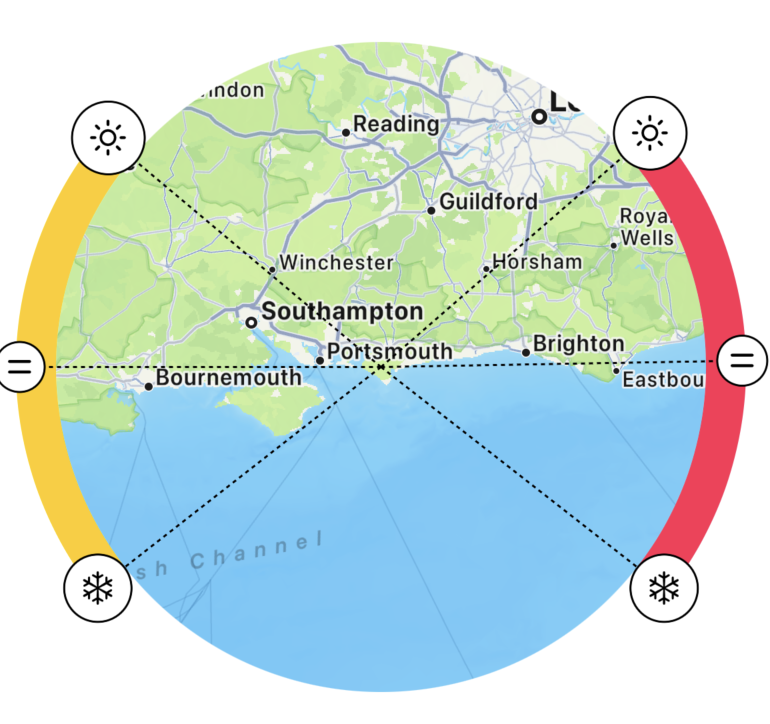
The pink arc shows the range of sunrise positions; the yellow is sunset. The = shows the sunrise and sunset positions on the equinoxes (due East and West), the sun shows the positions on summer solstice and the snowflakes show the positions on winter solstice.
In the northern hemisphere the sun rises and sets furthest north on summer solstice (21st June this year), and furthest south on winter solstice (22nd December this year):
Speaking of sunrise and sunset, I’ve got a new motivation for geeking out over a natural rhythm, which is that I’ve put solar panels on my roof, so now I’m tuning in even more to what the sun is up to. Which is why I’ve started making proof of concepts like these, to visualise what the sun and my solar array are up to. Of course another - better - way would be to use my eyes and look at where the sun is and what it’s doing, but I can’t do that at nighttime, when I can work on this.
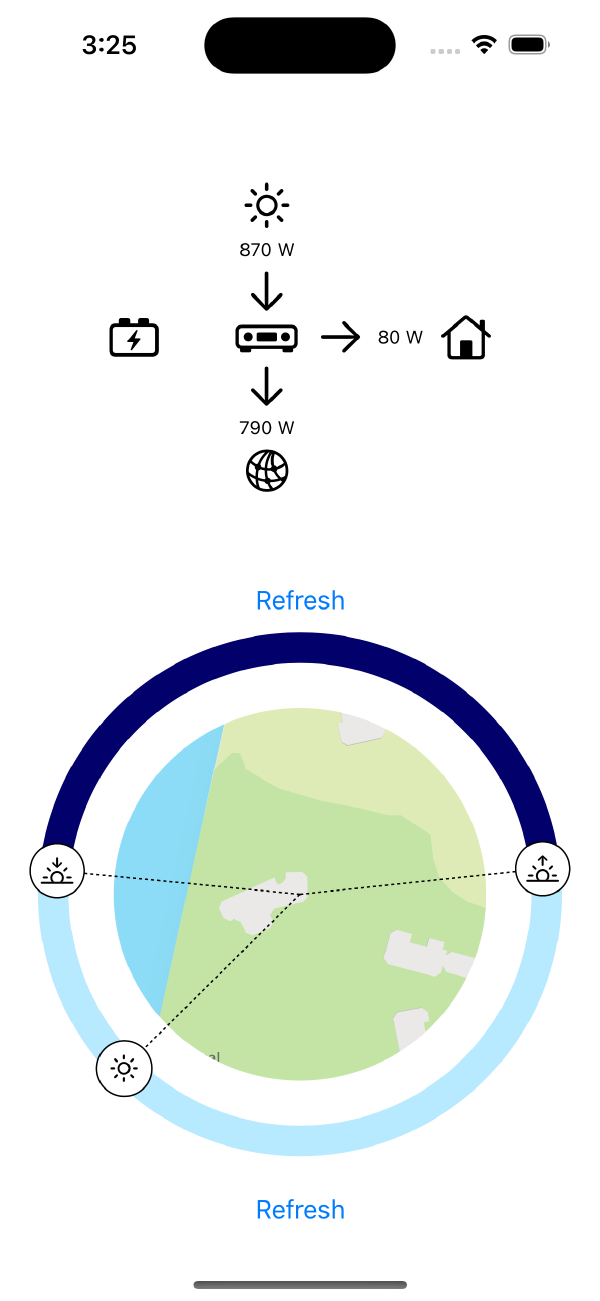
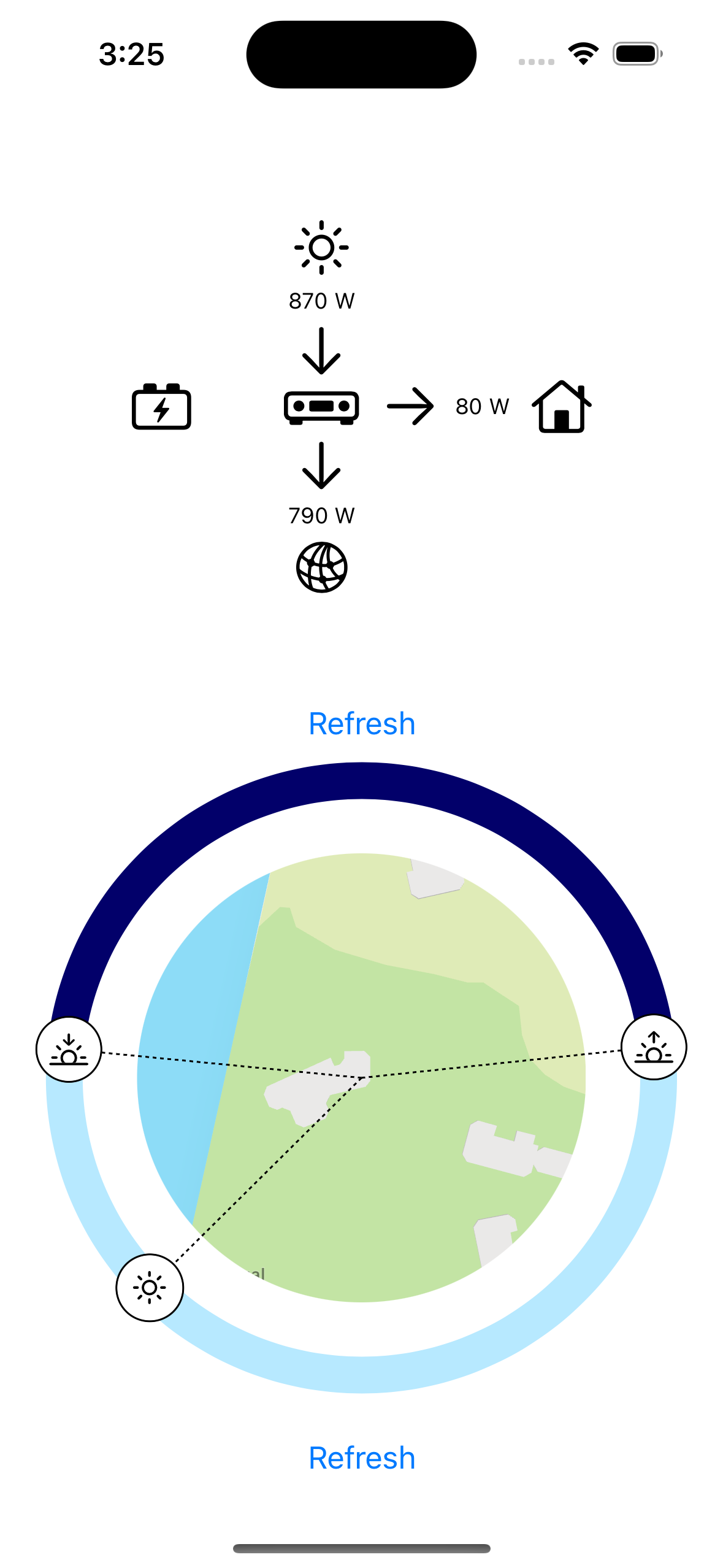
Those are working screens from a prototype iOS app I’m working on. So were those images showing the range of sunrise and sunset bearings above. I’m hoping to cobble together some novel ways of visualising what the sun and my solar panels are doing. It’s bananas how quickly you can get something like that working using SwiftUI and Xcode previews. And by using Charles Proxy to reverse engineer an API (for the inverter).